
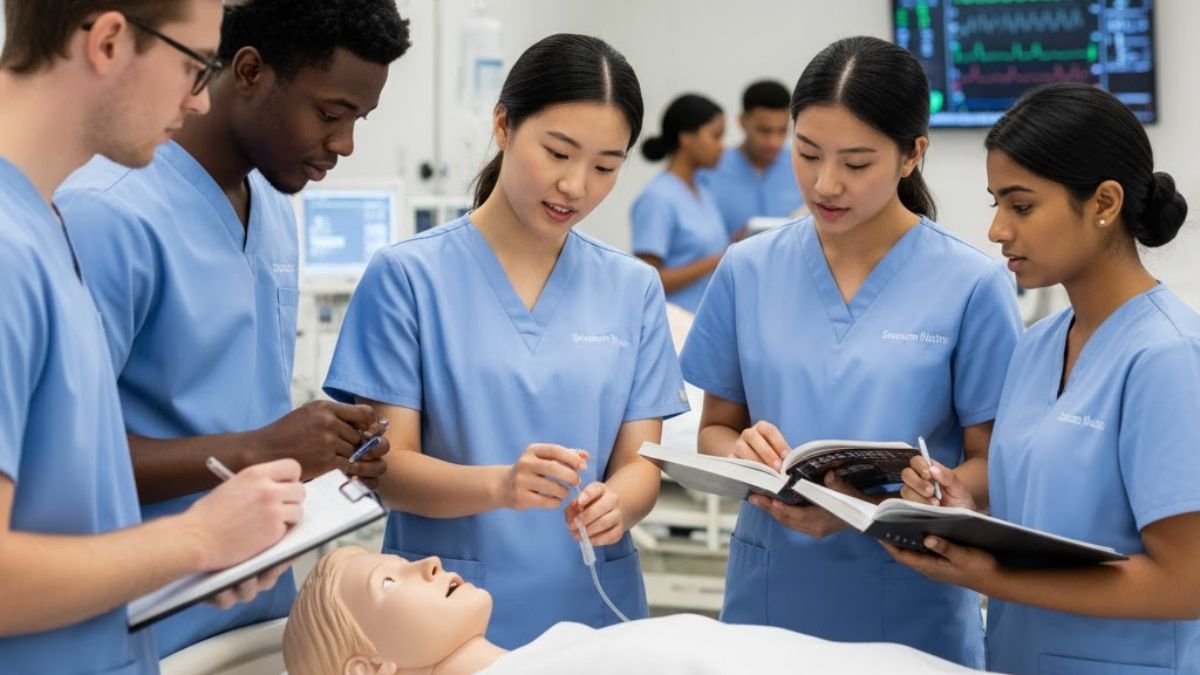
Michigan’s healthcare landscape is evolving rapidly, facing challenges like an aging population, rising chronic diseases, and a shortage of skilled nurses. In this environment, Michigan nursing students play a pivotal role in shaping the future of healthcare.
By combining clinical training with research, technology adoption, and community service, nursing students are preparing not just to join the workforce, but to transform healthcare delivery. Their fresh perspectives, enthusiasm, and innovative ideas help hospitals, clinics, and communities adapt to modern health demands.
This article explores how Michigan nursing students are shaping future healthcare, their contributions, leadership potential, and the skills that make them essential to the state’s health system.
Clinical Training: Building the Healthcare Workforce
Michigan nursing students undergo rigorous clinical training, gaining hands-on experience in hospitals, clinics, and community health settings. This early exposure ensures a skilled workforce ready to handle real-world challenges.
Key Contributions in Clinical Settings:
- Assisting in patient care under supervision
- Learning to manage diverse patient populations
- Gaining exposure to modern healthcare technology
- Participating in interdisciplinary teams
| Clinical Setting | Student Role | Impact on Healthcare |
|---|---|---|
| Hospitals | Patient care, vitals monitoring | Reduces staff workload, improves efficiency |
| Community Clinics | Health screenings, education | Increases access to preventive care |
| Rural Health Centers | Telehealth support | Bridges care gaps in underserved areas |
| Research Labs | Data collection, trial support | Advances evidence-based practices |
Through structured clinical experiences, Michigan nursing students help meet immediate staffing needs while preparing for future leadership roles.
Leadership Development: Preparing Tomorrow’s Healthcare Leaders
Beyond bedside care, nursing students are trained in leadership skills. Michigan schools emphasize the development of nurse leaders who can drive systemic change.
Leadership Skills Learned:
- Team coordination and delegation
- Conflict resolution and communication
- Ethical decision-making in complex scenarios
- Participation in hospital committees or student councils
Example:
At the University of Michigan School of Nursing, students lead peer mentorship programs and participate in policy discussions with faculty, helping shape institutional decisions.
These experiences ensure that students are ready to step into supervisory or administrative roles upon graduation, influencing both patient care and healthcare policy.
Innovation and Research Contributions
Michigan nursing students are increasingly engaged in research and innovation initiatives, contributing to evidence-based practice and improving patient outcomes.
Areas of Innovation:
- Telehealth solutions for rural communities
- Mobile apps for patient education
- Chronic disease management programs
- Quality improvement initiatives in hospitals
| Research Area | Student Contribution | Outcome |
|---|---|---|
| Telehealth | Testing new remote monitoring devices | Improved access for remote patients |
| Patient Education | Developing health literacy programs | Increased patient engagement |
| Chronic Care | Implementing follow-up protocols | Reduced hospital readmissions |
| Quality Improvement | Participating in data analysis | Enhanced care protocols |
By participating in research projects, nursing students help implement new strategies that directly affect patient care and efficiency.
Community Engagement and Public Health
Michigan nursing students often volunteer in community initiatives, health fairs, and vaccination drives. These activities extend healthcare beyond hospitals and into neighborhoods.
Community Roles:
- Organizing flu vaccination campaigns
- Conducting nutrition and wellness workshops
- Supporting underserved populations in urban and rural areas
- Advocating for public health policies at local levels
Example:
Western Michigan University nursing students participate in outreach programs targeting high-risk populations, providing screenings and health education, which prevents complications and fosters healthier communities.
Advocacy and Policy Involvement
Nursing students in Michigan are increasingly involved in health advocacy, shaping the policies that govern care delivery.
Opportunities Include:
- Participating in student-led advocacy groups
- Engaging with the Michigan Nurses Association for legislative action
- Lobbying for better staffing ratios and healthcare funding
- Educating peers and community members about health policies
By actively engaging in policy, students influence future regulations and resource allocation, ensuring that patient care continues to improve statewide.
Technological Proficiency and Digital Health
Modern healthcare relies heavily on technology. Michigan nursing students are trained to use electronic health records, telemedicine tools, and data analytics software.
Key Skills:
- Using EHR systems efficiently
- Understanding telehealth workflows
- Participating in health data analysis
- Implementing patient monitoring technologies
Impact:
Their tech-savviness ensures that hospitals and clinics adopt new technologies successfully, improving accuracy, efficiency, and patient outcomes.
Collaborative and Interdisciplinary Skills
Healthcare today is team-based. Nursing students in Michigan are trained to collaborate with doctors, pharmacists, social workers, and therapists.
Collaboration Examples:
- Multidisciplinary rounds in hospitals
- Joint projects with public health and social work students
- Participation in hospital quality improvement teams
Interdisciplinary collaboration enhances patient care, reduces errors, and encourages holistic approaches to health management.
Lifelong Learning and Professional Growth
Michigan nursing students are instilled with a culture of continuous learning. Participation in professional networks, continuing education, and specialty certifications ensures they are always ready to adapt to new challenges.
Benefits:
- Keeps knowledge current with latest practices
- Provides pathways for specialization (e.g., critical care, geriatrics)
- Encourages leadership and research involvement
- Opens doors to national and international opportunities
This culture of lifelong learning prepares students to be adaptable leaders who can respond to evolving healthcare needs.
Case Study: Student-Led Innovation in Michigan Hospitals
Project: University of Michigan Nursing Student Telehealth Pilot
- Objective: Expand access to mental health care for rural patients
- Action: Students assisted in implementing telehealth protocols, trained patients, and monitored outcomes
- Results: 30% increase in patient adherence to therapy, improved patient satisfaction, and reduced travel burdens
This example highlights how students’ contributions can lead to measurable improvements in healthcare delivery.
Challenges Nursing Students Face
While nursing students are essential to shaping healthcare, they face several challenges:
- High Academic Pressure: Balancing studies with clinical practice
- Workforce Shortages: Limited hands-on training opportunities
- Financial Constraints: Tuition and living costs
- Emotional Stress: Exposure to patient suffering
Support Strategies:
- Mentorship programs
- Financial aid and scholarships
- Wellness initiatives for mental health
- Flexible scheduling for clinical placements
By overcoming these challenges, students gain resilience and readiness for future leadership.
Conclusion
Michigan nursing students are more than future healthcare providers — they are architects of the system’s future. Through clinical excellence, research, advocacy, technological skills, and community engagement, they are reshaping patient care and healthcare delivery.
Investing in nursing students — through mentorship, scholarships, and opportunities for leadership — ensures that Michigan’s healthcare system will continue to evolve, adapt, and thrive in the years to come.
The contributions of nursing students today define the quality, accessibility, and innovation of healthcare tomorrow.
FAQs
Q1: How do Michigan nursing students contribute to healthcare innovation?
They participate in research, pilot new technologies, and implement quality improvement projects.
Q2: Can nursing students influence healthcare policy?
Yes, through advocacy groups, student organizations, and collaboration with the Michigan Nurses Association.
Q3: How do students gain real-world clinical experience?
Through hospital rotations, community clinics, and interdisciplinary collaborations.
Q4: What skills do nursing students develop for future leadership?
Leadership, communication, technological proficiency, and interdisciplinary teamwork.
Q5: Why is community engagement important for nursing students?
It helps prevent disease, educates the public, and prepares students to address diverse healthcare needs.